Digital vs paper stamp cards for UK small businesses
Paper stamp cards are cheap and familiar; digital loyalty cards give you data and a way to reach customers. An honest comparison for UK cafés, shops and salons.
Key takeaways
- Paper cards cost little and need no set-up, but you learn nothing about who uses them.
- Digital cards live in the phone wallet, can’t be lost and let you contact members.
- The real gain from digital is a customer list you can measure and message.
- You can run both during a short transition, then retire paper.
Why the paper stamp card has lasted
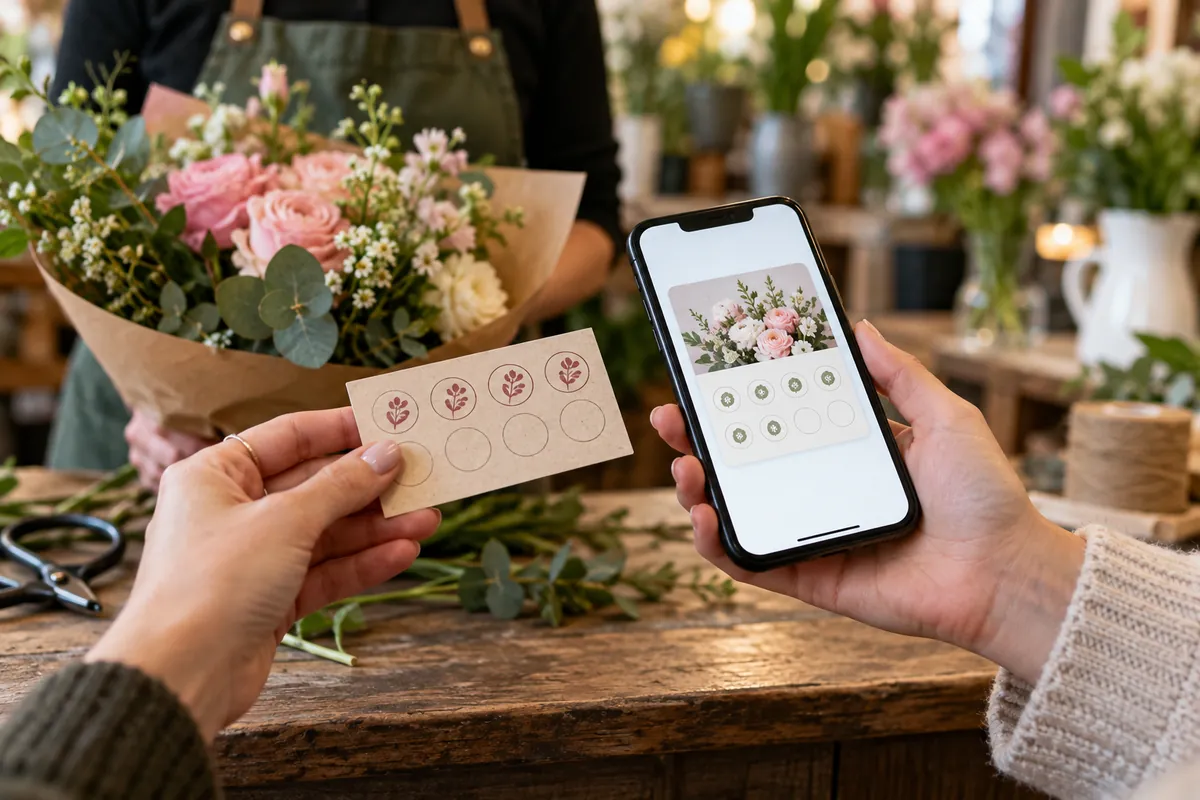
The paper stamp card is one of the most successful loyalty mechanics ever invented. It costs pennies, needs no training and every customer understands it immediately. For a new business with tight cash flow, a box of printed cards and a rubber stamp is a perfectly reasonable way to start.
The problems appear over time. Cards get lost, washed or left at home. Stamps can be copied. And the business learns nothing: you don’t know who your regulars are, how often they visit or whether the programme changes anything.
What changes with a digital loyalty card
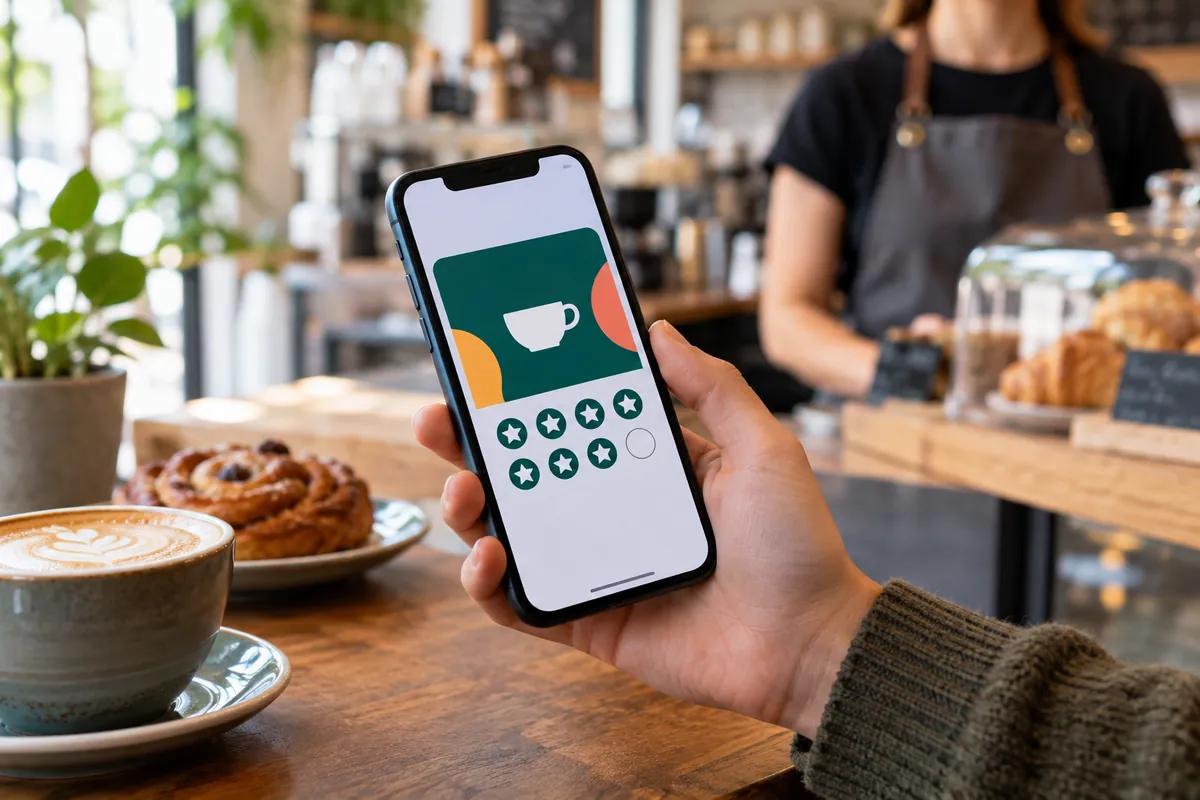
A digital loyalty card sits in the customer’s phone wallet, next to their boarding passes and bank cards. Customers join by scanning a QR code at the counter, fill in a short form and save the card. Their balance updates after each purchase, so there is nothing to forget or lose.
For the business, each card is linked to a customer record. You can see how many members you have, how often they return and how much they spend. That turns a loyalty scheme from a goodwill gesture into something you can measure.
Side-by-side comparison
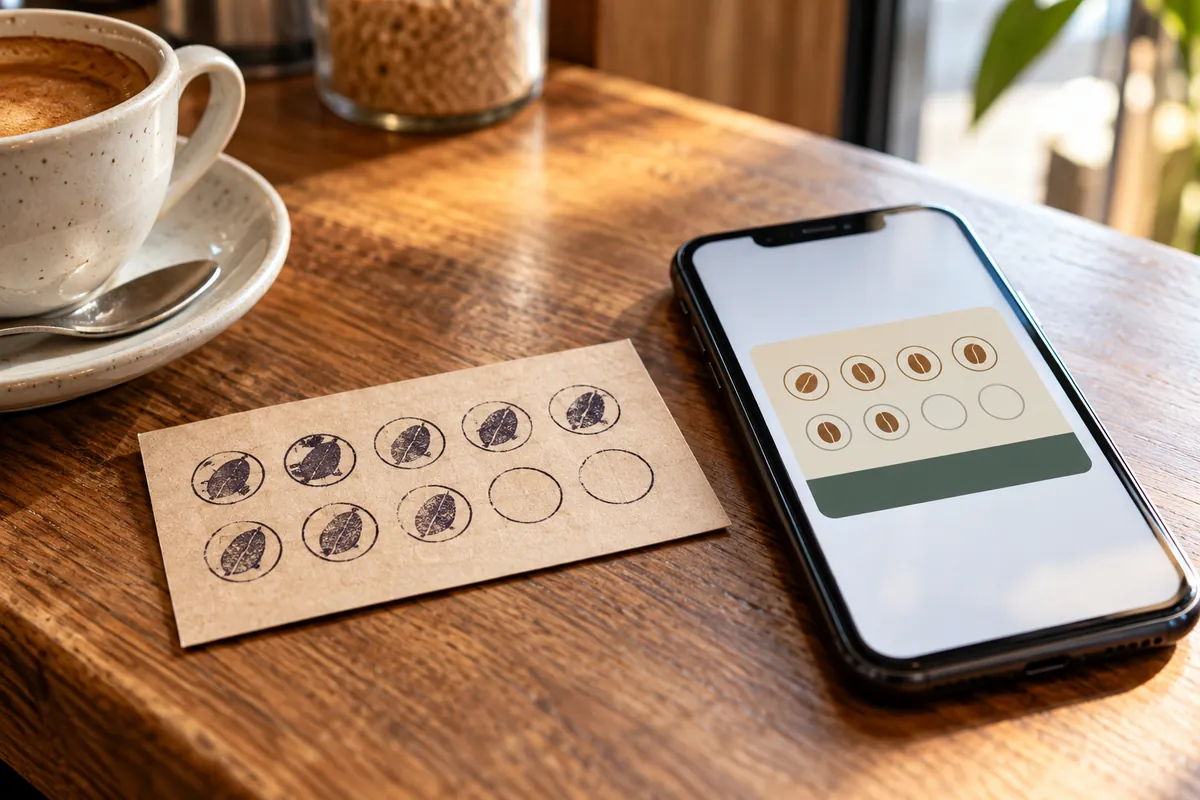
The comparison below assumes a typical independent café, shop or salon. The right answer depends on your customers and how much you want to do with the programme.
| Paper stamp card | Digital wallet card | |
|---|---|---|
| Set-up cost | Printing and a stamp | Monthly software subscription |
| Customer effort | Carry the card | Scan once, card stays in the phone |
| Lost or forgotten cards | Common | Rare; the card is on the phone |
| Fraud | Stamps can be copied | Balance held in the system |
| Customer data | None | Members, visits, spend |
| Contacting customers | Not possible | Push, SMS or email, with consent |
| Reward types | Visit count only | Visits, cashback, tiers, referrals (depends on software) |
| Measuring results | Guesswork | Return visits and redemptions |
The real advantage: knowing and reaching your regulars
The main reason to go digital isn’t convenience; it’s the customer list. When a regular stops coming in, a paper card can’t tell you. A digital programme can show members who haven’t visited for 30 days, and you can send them a reason to return. See our guide to winning back lapsed customers.
Digital also opens up rewards that paper can’t handle: cashback on spend rather than visits, tiers that recognise your best customers, and referral rewards that track who brought whom.
When paper is still fine
If your customers are mostly occasional visitors, your margins are very thin or you simply don’t want to contact customers, a paper card may be enough. The same goes for a pop-up or a seasonal stall where a monthly subscription doesn’t make sense.
Be honest about the trade-off, though. A paper scheme you can’t measure tends to stay on the counter for years without anyone knowing whether it works.
A year of costs, side by side
The cost comparison is less one-sided than it looks. The illustrative figures below are for a single café giving away a free coffee for every ten bought; replace them with your own.
- Digital costs more in software, so it has to earn that back.
- It usually does so through extra visits from customers you can now reach, not through savings on printing.
- If you will never message customers or look at the data, paper is the cheaper option.
| Item | Paper stamp card | Digital (Unity Start) |
|---|---|---|
| Cards and stamps | £60–£150 printing per year | £0 |
| Software | £0 | £49 × 12 = £588 |
| Rewards given | Same programme, similar cost | Same programme, similar cost |
| Lost or copied stamps | Unknown leakage | Balance held in the system |
| Ability to bring back lapsed customers | None | Targeted messages to members |
What customers tend to prefer
Many customers already keep boarding passes, tickets and bank cards on their phones, so a wallet loyalty card feels familiar. The main objections are privacy (“what will you do with my number?”) and effort (“I don’t want another app”). Answer both up front: explain that it is a card in their wallet, not an app, and that offers are optional.
Some customers, often older regulars, will still prefer paper. During a transition, let staff look these customers up by phone number so they can keep earning without changing their habits overnight.
How to switch from paper to digital
Choose a start date and tell customers in store. For a few weeks, let customers convert part-filled paper cards into a matching digital balance, then stop issuing new paper cards. Put the joining QR code where people wait, and give staff one sentence to explain it.
Record a four-week baseline of returning customers before you switch, so you can compare like with like afterwards. Our launch checklist has the full list of steps. For a wider view of the options, compare paper stamp cards, Square Loyalty and Unity.
For current guidance on customer information and marketing preferences, see the ICO’s direct marketing resources and our Privacy & GDPR policy.