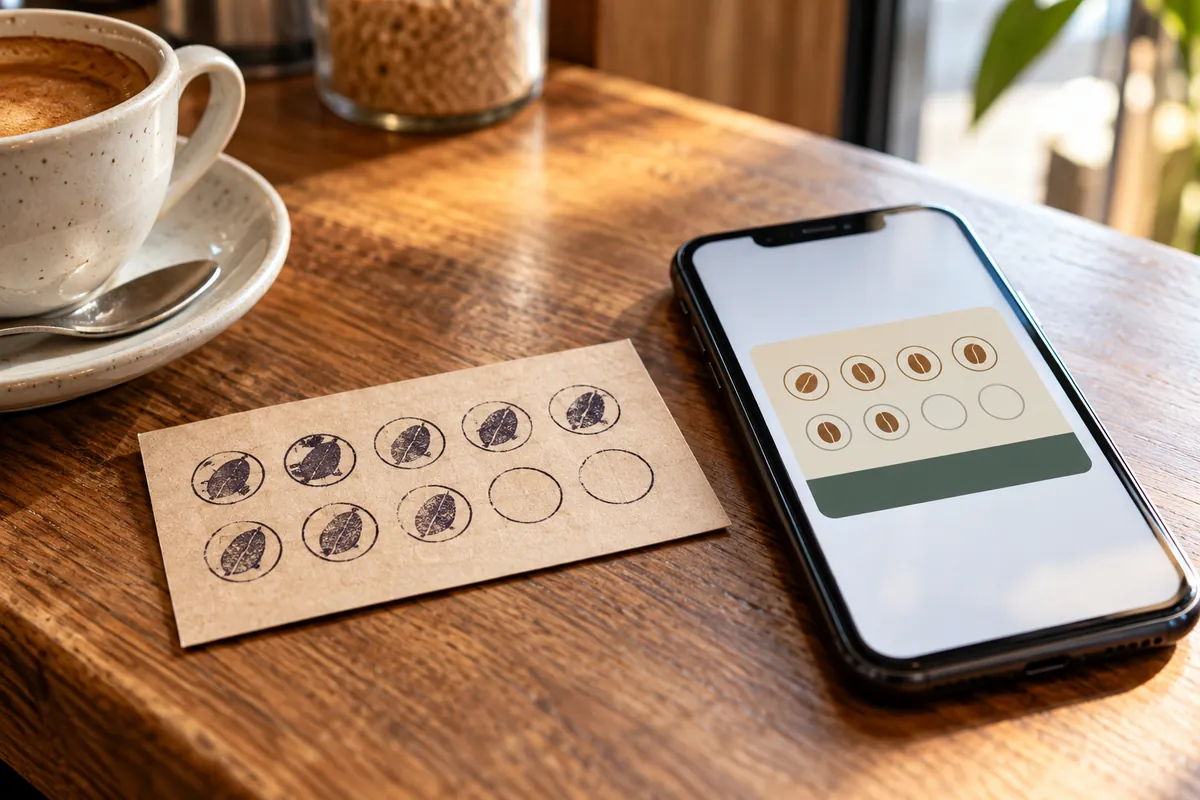
Loyalty cards for small businesses: choosing paper, wallet or app

Compare loyalty cards for small businesses in the UK: paper, wallet passes and apps, with joining, reward rules, lost cards and migration advice.
Key takeaways
- Choose the reward and checkout process before choosing a card format.
- Test supported phones, access recovery and the handling of lost cards.
- Honour earned rewards when moving customers to a new system.
Choose the reward before choosing the card
Loyalty cards for small businesses should make a useful reward easy to carry and claim. The card is an access point; the programme is the set of rules behind it. Decide what a customer earns, when they can use it and how you recognise them at checkout before debating paper versus a phone. A clear offer usually matters more than elaborate card artwork.
For a florist, a reward towards a later bouquet may fit the purchase pattern better than a visit stamp. For a café, a simple qualifying drink rule may be easy to explain. Write the offer in one sentence and ask someone outside the business to repeat it back. If they cannot, simplify the rule before adding a new format or more membership benefits.
Paper cards: straightforward but limited
Paper cards need little technology and can work for customers who do not want to use their phone. They also need a consistent stamp or marking process, readable rules and a decision about lost cards. Decide whether staff can combine cards and how they verify a completed reward. Keep the explanation identical across shifts so customers receive the same treatment.
The main limitation is visibility. An anonymous paper card does not tell you which member has stopped visiting, and you may only see it again at redemption. You can count cards distributed and rewards claimed, but those figures do not establish customer retention. If reaching lapsed customers is a core goal, check whether a digital membership approach better matches that requirement.
Wallet cards: check the actual phone experience
A digital wallet card puts the membership pass alongside other items on a customer’s phone. Ask a supplier to demonstrate the supported journey on current iPhone and Android devices. Adding the pass, showing the identifier and updating the balance are separate steps that should each work. Do not assume that the experience on one platform establishes what happens on the other.
Test a slow connection and a customer who closes the page before completing the add-to-wallet step. Check whether the browser membership page remains available and how the customer returns to it. Our wallet card guide explores these questions in more detail. The demonstration should use the supplier’s real supported features, rather than an attractive mock-up with unverified behaviour.
Dedicated apps: weigh the reason to install
A dedicated app can be useful when customers already need frequent ordering, bookings or other substantial services from your business. For a simple reward, installing another app may add a step that customers do not value. Ask what the app provides beyond displaying a card and whether that benefit is important to your particular customer base.
Assess account creation, sign-in recovery, operating-system support and updates. Include the work needed to help customers who change their phone or forget how to access the account. Compare the full experience with a wallet pass and a browser option. The best format is the one customers can use reliably in your setting, rather than the one with the most screens.
Design a card people recognise at the till
Use your business name, a recognisable visual style and a readable membership identifier. Avoid shrinking important information to fit every possible rule onto the front. Put the full terms on an accessible page and keep the key reward explanation near the joining point. A decorative image should not make the identifier difficult for staff or a scanner to read.
Try the card under the lighting at your checkout, on a small phone and at different brightness levels. Make sure staff can identify where to scan or read the membership number. Practise a customer holding the phone at an awkward angle and someone needing help finding the card. These ordinary situations are more useful tests than a perfect studio screenshot.
Plan joining, missing cards and migration
A joining QR code should lead to a page that clearly names your business and explains the offer. Give customers a way to find the terms and understand how their information is used. Check communication choices against the ICO’s direct marketing guidance. Optional marketing should be clearly distinguishable from the steps needed to manage membership.
If you replace an existing card system, decide how to honour earned value and handle duplicates. Tell staff what evidence is acceptable and set a practical migration period. Test one customer moving from paper, one changing their phone and one who needs access restored. Keep the launch checklist nearby so card design does not crowd out training and reconciliation.
Use a comparison checklist before you commit
Compare formats against the same questions: can customers join easily, show the card quickly, understand their balance and recover access? Can staff correct a mistake and explain a redemption? What does each option cost at your likely volume? Include reward costs and staff time alongside the published software plans, so the comparison reflects running the scheme rather than merely issuing cards.
Bring your reward idea and a sample purchase to a Unity demonstration. Ask to see the supported phone journey and the staff workflow together. Afterwards, record which steps fit your business and which need further confirmation. Start with one manageable offer, review how customers use it and add complexity only when it solves a problem you have observed. To see how digital loyalty cards for small businesses work in practice, start with the customer card and the staff app side by side.
For current guidance on customer information and marketing preferences, see the ICO’s direct marketing resources and our Privacy & GDPR policy.