Cashback vs points vs discounts: choosing a loyalty reward
Stamps, points, cashback and instant discounts compared for UK small businesses: what each costs, who it suits and the arithmetic behind a reward you can afford.
Key takeaways
- Instant discounts cost margin on every sale; deferred rewards only cost when redeemed.
- Visit stamps suit similar-value purchases; spend-based rewards suit varied baskets.
- Calculate reward cost against gross margin, not the till price.
- Expiry and redemption limits are design tools, not small print.
Four common reward designs
Most small business loyalty schemes use one of four mechanics. Each one changes customer behaviour in a different way and has a different cost profile, so it is worth choosing deliberately rather than copying the shop next door.
| Design | How it works | Suits |
|---|---|---|
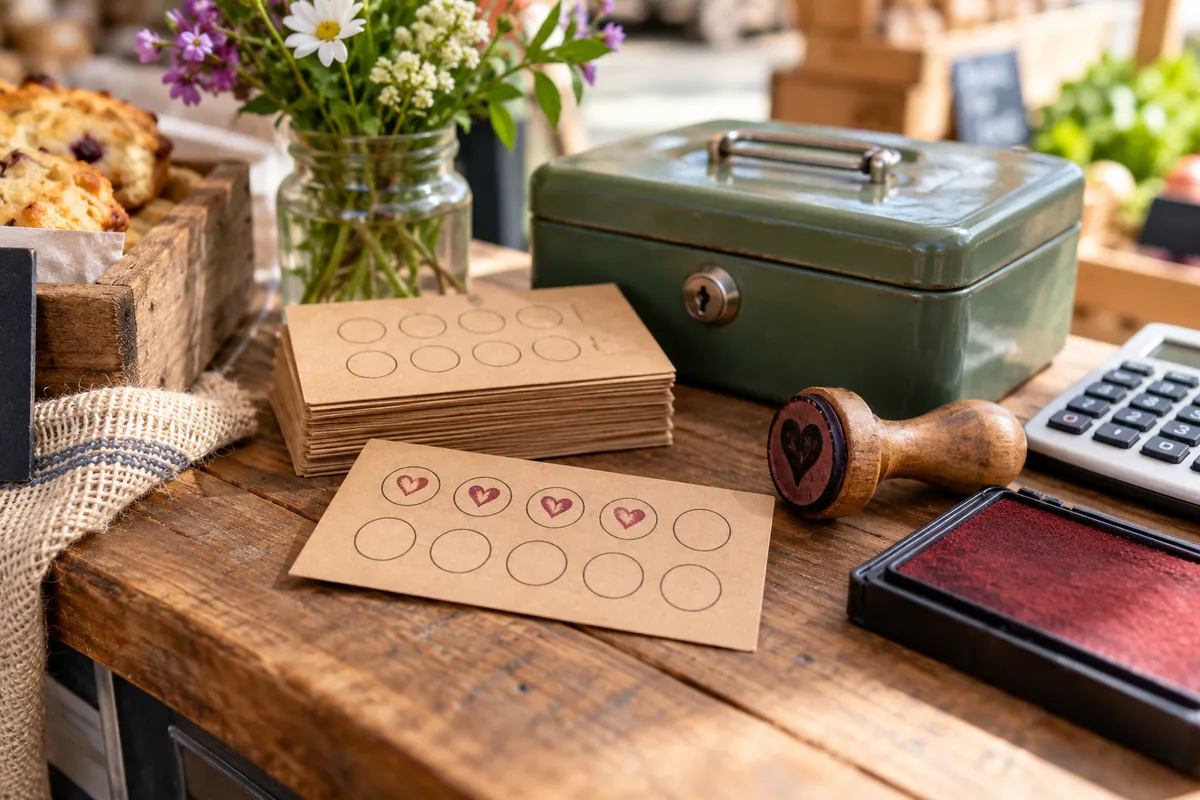
| Visit stamps | Buy N, get one free | Similar-value purchases, such as coffee or car washes |
| Points on spend | Points per £1, exchanged for rewards | Varied baskets and product ranges |
| Cashback | A percentage of spend returned as a balance | Businesses that want a simple, fair rule |
| Instant discount | A fixed % off for members at the till | High-competition, price-led categories |
Why deferred rewards usually beat instant discounts
An instant 10% member discount costs you 10% of every member transaction from day one, including customers who would have come back anyway. A deferred reward such as cashback is only a cost when the customer returns to spend it, and that return visit is exactly the behaviour you want.
Deferred rewards also give the customer a reason to come back: a balance waiting for them. That is why most successful programmes reward the next visit rather than the current one.
How cashback works in practice
In a cashback programme, the customer earns a percentage of what they spend as points. In Unity, 10 points equal £1 of discount. So at 5% cashback, a £20 purchase earns 100 points, worth £1 off a future purchase.
Cashback is easy to explain (“you get 5% back”) and fair across basket sizes: the customer who spends £40 earns twice as much as the one who spends £20. Add tiers and the rate can rise as a customer’s total spend grows.
Do the margin arithmetic
Reward cost should be measured against gross margin, not price. If a coffee sells for £3.50 and costs you £1.00 in ingredients and packaging, your gross margin is £2.50. A “tenth coffee free” reward gives away about £1.00 of cost for every £35 spent, roughly 2.9% of sales. A 5% cashback costs 5% of sales but only when redeemed, and the redemption itself brings a visit.
Not every reward is redeemed: some customers never return, and some points expire. Don’t build that into your plan as profit, though. Price the programme as if most rewards will be used, and treat breakage as a buffer.
Limits, exclusions and expiry
Three settings keep a programme affordable. Redemption limits cap how much of a purchase can be paid with points. Category exclusions keep low-margin items, such as tobacco or gift cards, out of the programme. Points expiry stops balances building up for years. In Unity you control all three, and with the Square integration you can set the share of each product category that can be paid with points.
Tell customers the rules when they join. A clear, generous-feeling rule beats a big headline number with surprises at the till.
Which one should you choose?
If your purchases are similar in value and you want maximum simplicity, stamps work. If baskets vary, cashback or points on spend is fairer and easier to defend. Avoid permanent instant discounts unless you compete mainly on price. Then test: run the programme for a month and review return visits and reward cost, as described in measuring loyalty programme ROI. Every Unity plan includes cashback in points, with redemption limits and expiry you control.
For current guidance on customer information and marketing preferences, see the ICO’s direct marketing resources and our Privacy & GDPR policy.